Putting Runcorn on the Map: Tony Collacott on Community, Culture and Change in Runcorn
This month the Programmes Team at Halton Borough Council caught up with Tony Collacott, founding Trustee at the Wat Phra Singh UK Temple in Runcorn, and project lead for the Peace Garden and the new Ubosot Hall at the temple. His connection to Runcorn began over a decade ago with the search for a building in the area to take on as the Buddhist Temple. This went on to turn an already iconic local landmark from BBC Sitcom Two Pints of Lager and a Packet of Crisps into becoming home to a very successful Buddhist Temple and Meditation Centre, and also home to the first of its magnitude Chedi all the way from North Thailand. Putting Runcorn on the map across the world.
Going back to the beginning how did you first get involved with Reconnecting Runcorn?
“Really it goes back to when we first moved here in 2013, we were looking for a property and I had a contact at Halton Borough Council. I made what I thought was a long‑shot phone call asking whether they knew of any difficult or unused buildings we might take on. That call eventually led us to the old Waterloo Hotel, which we bought and converted into the temple.
Because of that early relationship, the Council already knew who we were. Not long after we’d moved in, we were invited to speak at a meeting of the Runcorn Town Team, a group set up through the Mary Portas Fund to help regenerate the High Street. After speaking about the temple and our aims, we were asked to join the team to represent our faith, and to have the temple be part of the regeneration happening in Runcorn. We were delighted. From there the Town Team ultimately evolved into the Town Deal Board and I naturally became part of that journey.”
How has being a part of Reconnecting Runcorn right from the beginning been for the Temple?
“It’s been really good for us, and I hope for the community as well. Our geographical location as well has been amazing as the Town Deal was all about reconnecting Runcorn, which included reconnecting the station and the Old Town and we are smack bang in the middle of that. So, we couldn’t have been better placed for that, it was meant to be.”
At what point did the idea for the Peace Garden emerge?
“That one arrived almost by accident! I’d seen a map of the regeneration ideas, and the triangular grassy area outside the temple was shown as just a blank piece of green. A couple of weeks before a Town Deal meeting, I’d watched people try to sit on that slope during a sunny event at the temple and struggle — bottles rolling away, people sliding down it! It really wasn’t a usable space.
At a Board meeting, we were asked for ideas to improve the built environment. I was near the end of the circle and thought, “Crikey, they’ll be coming to me soon… I need an idea!”
So I mentioned that unused piece of grass and said, on the spot, that if the Council didn’t need it, we’d take it on — and create a Peace Garden. I hadn’t planned to say it; the words just came out.
A week later, Halton Borough Council came down — three managers and Wesley — not to talk through the proposal, but simply to tell me to get started with it. That’s when it became real.
That’s amazing! So, how did the design and development of the Peace Garden come together?
“Fast! Much faster than I ever expected.
We had to commission a ground survey because there were old underground structures. We worked with the civil and structural designers who’d done our new hall design package. We already had a topographic survey, which made things easier.
So, once we’d sketched the initial design, the plans were sent off to our parent temple in Chiang Mai, Thailand as they were keen to know what we were doing. A former monk over there, who had since become a successful businessman, saw the design and offered to personally fund the entire golden chedi. Around £60,000, just donated out of pure generosity. It still amazes me.
Then the funding for the wider garden came from Veolia Environmental Trust and Reconnecting Runcorn through the Town Deal fund. It genuinely felt like everyone wanted the project to succeed.
The garden is just incredible with how it has turned out. But now you’re also leading on the new Ubosot Hall. Why is this building so significant?
“It’s hugely significant, for both our community and for Runcorn.
It will be one of only two or three purpose‑built Thai Ubosot Halls in the UK, and the first of its kind in the North.
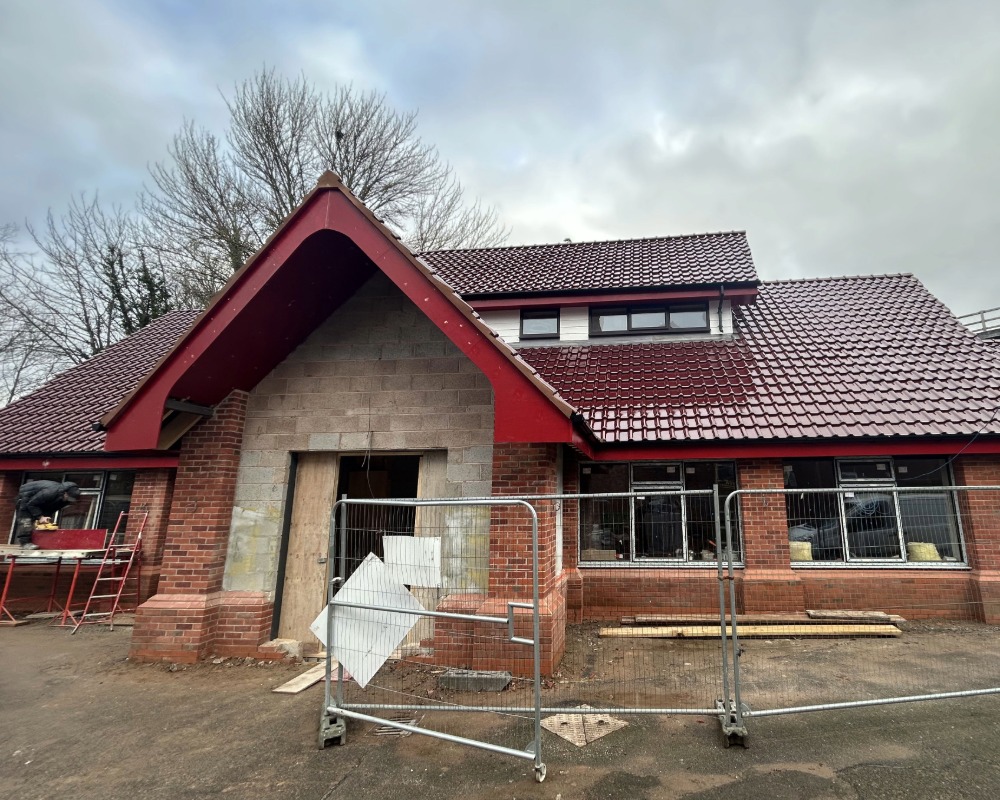
On site at the Ubosot Hall on Friday 23rd January 2026
Although an Ubosot is traditionally consecrated ground for ordinations and ceremonies, we’ve designed this one with the wider community in mind. It has accessible toilets, multi‑use space, facilities you wouldn’t normally have in a hall like this.
Groups like Hazlehurst Studios and the Women’s Institute want to use it. There’s interest from cultural organisations and even people developing regulatory frameworks for traditional Thai massage. I can also see it being used for things like exhibitions, meetings, maybe even as a polling station for elections.
Our current building is already registered for Halton’s emergency resilience planning. The new hall expands on that. It’s both a spiritual space and a community one.”
Looking to the wider Reconnecting Runcorn programme, what are you most excited about?
“The Health Hub, WELL Runcorn, is absolutely pivotal. Bringing different health services together under one roof will make life easier for residents. And because it’s right in the town centre, it will bring new footfall to local shops that wouldn’t otherwise have been there. I’m also excited about what’s happening around the Brindley, including the plans to strengthen the night‑time economy. And the reuse of buildings like the old Bank Chambers and the old baths, that’s important with the new Pride in Place funding. It gives forgotten spaces a new purpose.
I grew up in Frodsham in the 1950s and remember Runcorn in its heyday. The 1970s planning decisions really hurt the town. But I honestly believe it’s time has come again.”
How do you think local residents have responded to the projects that have already been delivered?
“The thing I hear most often is: “Runcorn is changing.”
People can see the difference now. For years, regeneration was talked about, but not always visible. But once diggers appear, once buildings start to open, the perception shifts. You’ll always get a bit of negativity, that’s just life, but I honestly think people are more excited and receptive than ever.”
From your perspective as both a Board Member and a project lead, what’s been your highlight?
“Securing the £23.6 million Town Deal funding was a huge moment, together with a great deal of match funding it made everything possible.
But for me personally, seeing long‑planned projects finally taking shape on the ground has been the highlight. People don’t always realise how long these things take. Some of our plans have been seven or eight years in the making.
Delivering big projects through Brexit, Covid, inflation, these were incredibly difficult circumstances. Yet the Board kept the momentum going. That’s something I’m very proud of.”
Is there anything you think people on the outside of the programme should know about what it’s like to be on the Runcorn Town Neighbourhood Board?
“Yes — how well the team works together. People from all sorts of backgrounds, all there voluntarily, all bringing different strengths. And somehow everyone pulls in the same direction. That’s the real engine of this regeneration. Good people working well together.”
To keep up to date with the Ubosot Hall and the other projects visit reconnectingruncorn.info/news/